Happy Gilmore Saying “Are You Too Good For Your Home?!”
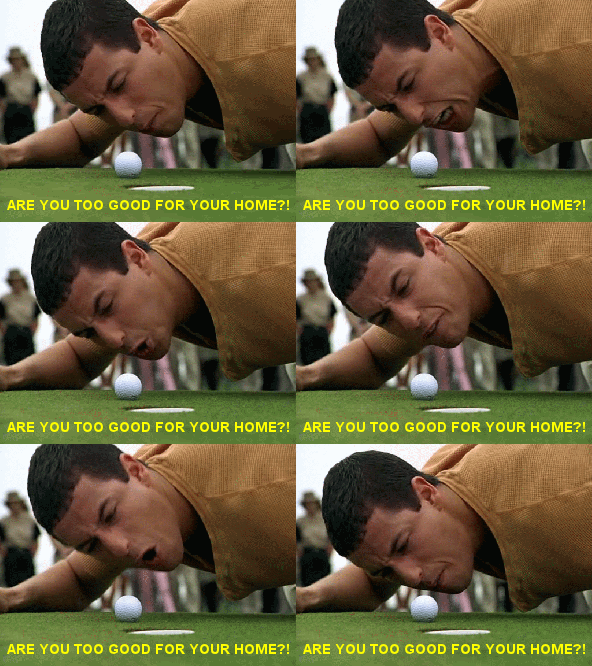
Happy Gilmore (Adam Sandler) angrily asks a golf ball, “Are you too good for your home?” while struggling to make a putt during a scene from the 1996 film Happy Gilmore.
This Adam Sandler GIF is perfect for frustration, dealing with something that refuses to cooperate, repeatedly failing at a simple task, losing patience, or jokingly arguing with an inanimate object.
Happy delivers the line after repeatedly struggling to get the golf ball into the hole. Instead of blaming his putting, he becomes increasingly frustrated with the ball itself, eventually asking why it refuses to go to its “home” before continuing his argument with it.
The scene highlights one of Happy’s biggest challenges when he begins playing competitive golf. His hockey background gives him tremendous power off the tee, but putting requires the patience and control that his aggressive personality initially lacks, creating an ideal setup for one of his trademark outbursts.
Happy’s temper produces plenty of memorable reactions throughout the movie, from giving an emphatic thumbs down to threatening a miniature-golf obstacle with “You’re gonna die, clown!”. These moments capture the frustration and competitiveness that make Happy Gilmore such a recognizable character.
“Are you too good for your home?” became one of Happy Gilmore’s most recognizable quotes and works well outside its original golf context. The phrase can be jokingly directed at almost anything refusing to go where it belongs, from a basketball missing the hoop to an object that simply will not fit into place.
The phrase has also become a familiar reference among golfers everywhere, who often quote the line after a putt stops short, rolls past the hole, or simply refuses to drop. The phrase has moved beyond the golf course as well, becoming a playful everyday reference whenever something refuses to go where it belongs or cooperate with a seemingly simple task.
Happy Gilmore GIFs remain popular because the movie’s memorable quotes, sports comedy, and Adam Sandler’s exaggerated reactions provide responses for frustration, anger, competition, celebration, and everyday conversations.